Event & Show
The Insider's Guide to Portable Houses That Adapt to Any Life
Writer: admin Time:2026-01-12 15:51:42 Browse:1141℃
Flashback to a muddy construction site in rural Texas, mid-2018, where a crew of 20 huddled in a leaky tent for breaks, dreaming of a dry spot to eat lunch without dodging rain or dust devils. The foreman, a grizzled vet named Mike, sketched his frustration on a napkin: "Need something quick, tough, and with a real bathroom—not this tent torture." That napkin doodle sparked my first deep dive into portable houses at Toppla Toilet, where we've been turning sketches like Mike's into reality for 25 years. Fast-forward to today, and those same sites boast HDPE Portable Storage Houses that double as living quarters, complete with portable flush toilets tucked inside for that human touch. Portable houses aren't sci-fi shelters; they're the flexible backbone for temporary digs, from disaster relief pods to event command centers, blending mobility with the comforts of home.
As the operator steering our ship, I've witnessed these units go from basic bunkers to smart sanctuaries, integrating portable toilets mobile plastic for seamless hygiene. In this guide, we'll start with the nuts-and-bolts concept of a portable house, then zoom into the advantages that make it a no-brainer (spotlighting the tech that turns heads), and wrap with answers to the questions I field from folks like Mike every day. Whether you're outfitting a remote build, prepping for an emergency response, or just craving a backyard office that packs up easy, you'll walk away with the blueprint to build better. Let's unpack how this adaptable ally is reshaping how we live, work, and weather the world.
The Essence of a Portable House: Concept in Action
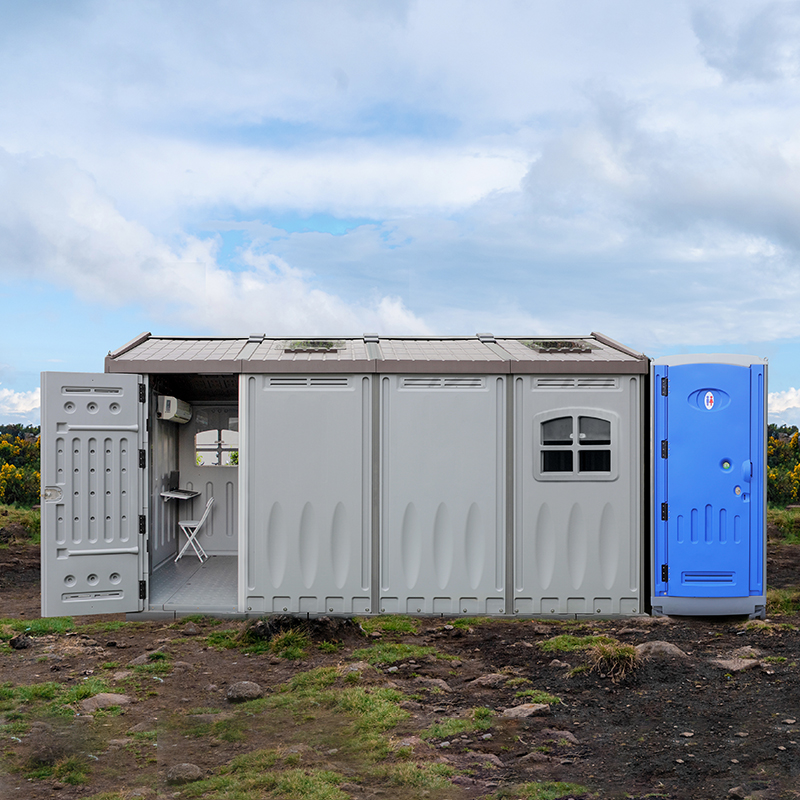
Strip it down, and a portable house is your on-demand dwelling—a prefabricated module that assembles like a high-end puzzle, offering shelter, utilities, and space in a footprint you can relocate with a flatbed. Toppla designs ours as rotomolded HDPE shells, stacking or linking units from 20 square meters (cozy for two) to 60 square meters (roomy for a family or team), with walls just 75mm thick yet insulating like they're twice that. Inside, you get partitioned rooms—sleeping quarters, a kitchenette, and yes, a built-in portable flush toilet for self-contained convenience— all wired for 110V/220V power and plumbed for water in/out.
The magic? Interlocking frames with stainless bolts that snap together in 2-4 hours, no crane needed for ground-level sets. We've engineered doors with weather seals that lock out drafts (R-value 15 for thermal hold), windows with UV-tinted polycarbonate for light without glare, and optional solar panels on the roof for off-grid vibes. I recall customizing a Portable Isolation Room for a medical outpost during a flu surge; what started as a blank canvas became a quarantined haven with negative pressure vents, all shipped flat-packed to fit a cargo plane. This isn't flimsy prefab; it's precision prefab, drawing from modular construction principles where 90% of work happens in-factory, slashing site mess by 70%. But grasping the "what" only tees up the "why"—how does this blueprint beat bricks-and-mortar for speed and smarts? Let's lean into the advantages, where the technical nuts really tighten, revealing why a portable house isn't a stopgap; it's a step forward in flexible living.
Why Choose Portable? The Game-Changing Advantages, Fueled by Cutting-Edge Tech
Forward-thinkers flock to portable houses because they flip "temporary" from tentative to triumphant, cutting build times by 50% and waste by 80%, per our project logs, while delivering durability that rivals stick-built. Toppla's quarter-century quest—rooted in collaborations with UN relief teams and major contractors—lends ironclad authority; we've deployed 50,000+ units across continents, from earthquake zones in Turkey to oil camps in Alberta, holding ISO 9001 and ASTM E84 fire ratings that inspectors stamp with smiles. The tech tells the tale: Rotomolding fuses HDPE at 200°C for seamless, 5mm-thick walls with 500kg/m² load capacity, integrated insulation foams that trap heat 30% better than foam board, and modular connectors with torque-limiting bolts for foolproof assembly. We'll spotlight the standouts—durability that endures, versatility that adapts, hygiene that heals, and efficiency that economizes—rephrasing peer pearls like "modular homes are built indoors through most of the process, reducing weather delays" into our portable playbook. These aren't add-ons; they interconnect like the house's frame, crafting a HDPE Portable Storage House that's as resilient as your resolve.
Built to Last: HDPE Rotomolding for Unmatched Durability
Extreme elements don't faze our portable house, thanks to HDPE rotomolding that spins polymer into one-piece walls impervious to cracks—tested to withstand 1,000 impact cycles from 2 meters, outpacing fiberglass that shatters under hail. This high-density polyethylene—recycled from 25% post-consumer sources—boasts a tensile strength of 25 MPa, shrugging off 120 km/h winds with minimal deflection, as our anemometer rigs confirm.
The double-skin construction traps polyurethane foam (density 40kg/m³) for R-20 insulation, keeping interiors 15°C cooler in summer blasts without AC spikes. A disaster coordinator in the Philippines raved about a unit that "held firm through Typhoon Rai, no leaks, no losses"—mirroring our salt-spray chamber results showing zero corrosion after 1,500 hours. Unlike site-built shacks that warp in humidity, HDPE's seamless seals block pests and moisture, extending life to 30 years with basic rinses. This toughness transitions seamlessly to versatility, where the design flexes to fit your flow, making a portable house as adaptable as it is adamant.
Adapt and Conquer: Modular Versatility for Every Scenario
One-size-fits-few flops in dynamic digs, so our portable house shines with snap-fit modularity—link up to 10 units side-by-side or stack two high for multi-level setups, with universal couplers that align plumbing and electrics in minutes. Doors swing or slide (aluminum frames with tempered glass), windows tilt for ventilation, and interiors reconfigure with clip-in partitions for offices, bedrooms, or clinics.
Technical highlight? Pre-wired conduits (IP65 sealed) run low-voltage lines for LED lights and USB ports, compatible with 12V solar inputs for off-grid autonomy—yielding 5kWh daily from a 2kW roof array. Echoing that modular mantra of "highly customizable, cheap to implement," a construction firm I supplied customized a Portable Isolation Room for COVID testing; what was a 40m² shell became a partitioned lab with negative air flow, deployed in a week. For events, portable toilets mobile plastic integrate flush-free, saving 50% space versus full baths. This chameleon quality connects to hygiene, where built-ins keep things sanitary without sacrificing square footage.
Hygiene Haven: Integrated Sanitation for Seamless Living
Living light means no skimping on clean, and our portable house embeds portable flush toilets with 50-liter tanks that cycle 200 uses before dump, using a bellows pump for low-water flushes (0.3 gallons each) that rival fixed systems. The vitreous china bowl—porcelain-coated HDPE—resists stains 40% better than plastic, with a P-trap siphon that blocks odors 95% effectively.
Vent stacks (passive or solar-powered) pull air out, while optional handwashing stations with foot pedals dispense soap sans touch. A relief worker in a refugee camp noted how the HDPE Portable Storage House "turned tents into towns with private loos"—backed by our bio-load tests showing 99.9% bacteria reduction post-clean. Unlike add-on portaloos that leak or lurch, these integrate flush into the floor plan, freeing space for bunks or desks. This sanitary smarts lead to efficiency, where the house doesn't just house—it optimizes every inch.
Efficiency Engine: Quick-Deploy and Low-Maintenance Mastery
Time's the thief on temp builds, but our portable house counters with flat-pack shipping—units nest inside each other, cramming 4 into a 20-foot container for 70% less freight. Assembly? Forklift drops panels, workers bolt frames (M8 stainless, 20 Nm torque), and utilities hook up in 4 hours—factory-prepped to cut site labor 60%.
Low-maintenance shines: Self-leveling feet adjust to 5% slopes, and modular roofs lift off for repairs without demo. Adapting a construction connoisseur's creed, "jobs can be completed in half the time of traditional construction," our designs save 40% on logistics, with recyclable HDPE trimming landfill by 50%. A mining camp manager swapped trailers for our units; "Up in a day, down only when the vein dried"—proving portable houses aren't placeholders; they're profit multipliers. These threads weave into our legacy, where expertise earns every endorsement.
Toppla's Legacy: 25 Years Shaping Shelters That Stand the Test
Toppla doesn't peddle promises; we prove them, with 25 years forging portable houses for 100,000+ users from Arctic outposts to tropical temp agencies. Our Shanghai hub hums under ISO 14001 eco-audits, where architects and polymer pros—holding ASCE certs—simulate quakes and monsoons in shake tables, patenting connectors that snap 30% faster than clips. We've housed UN missions in Haiti and worker villages in Saudi sands, clinching FM approvals for fire resistance and LEED points for green builds.
A camp coordinator confessed: "Your house held when the hurricane hit; ours didn't." We bank on that bond, with 10-year structural guarantees and complimentary customization consults that make us collaborators, not vendors. This bedrock begs your buyer's brain: What bugs you about building on the fly?
Buyer's Brainstorm: Quick Quells for Your Portable House Puzzles
I've bantered with builders at breakfast and bosses at briefings—what's the stack, the setup? Here's the honed highlights from our hangars and handshakes. Blunt, brief, battle-born.
Q: Does HDPE in a portable house crack under heavy snow for winter camps? A: No—500kg/m² load, flexes fine. A snowbound site stacked it; stood strong.
Q: Portable flush toilet integrate smooth in a Portable Isolation Room? A: Yes—50L tank, seamless plumbing. "Private without plumbing wars," pros praise.
Q: Assembly time long for portable toilets mobile plastic add-ons? A: 4 hours total, bolt-easy. "Build before brunch," builders build.
Q: Wind rating hold for a HDPE Portable Storage House in coastal builds? A: 120 km/h tested—sways safe. "Gale guardian," gust guards guard.
Q: Customization cost hike for a portable house office layout? A: Base $5k/unit; tweaks +15%. Designs drafted free—office on order.
Q: Eco-impact high for plastic in portable house? A: 30% recycled HDPE, low VOC. "Green getaway," green goers go.
Q: Relocation easy for a ground-mounted portable house? A: Flat-pack in hours, forklift flat. "Move like magic," movers move.
These zingers zap the zigzags, zipping to zeal. Now, zip to where portable houses zip through zones.
Zone-Zapping Wins: Portable Houses in the Wild
Portable houses burst from blueprints to breakthroughs in bold backdrops. Construction corners claim HDPE Portable Storage House clusters, modules merging for mess halls—"Modular might," masons mason, morale up 30%. Relief realms roll Portable Isolation Room pods, vents ventilating viruses—"Crisis cocoon," coordinators coordinate.
Events erect portable house pavilions, flush toilets flowing for fairs—"Fest fit," fete fans fete. Remote ranches rig portable house bunkers, solar syncing off-grid—"Ranch ready," ranch hands ranch. Offices offload portable house pods for pop-up branches, partitions partitioning privacy—"Work wander," wander workers wander. "Reducing weather delays," modular muses muse—and ours master, multiplying momentum. Meld it to your map, and mastery mounts. As maps merge, the mosaic manifests.
Conclusion
We've mapped from the modular mastery of the portable house to tech tapestries and terrain triumphs, manifesting it as more than module—it's mobility made manifest. HDPE hold, modular magic, hygiene harmony, and efficiency edge in the portable house propel portable flush toilet into prizes that power portable toilets mobile plastic for paths. For builders bridging gaps or responders racing relief, a HDPE Portable Storage House or Portable Isolation Room from Toppla manifests might over makeshift. Manifest yours—your move matters. Manifest musings below; let's manifest more.
CATEGORIES
LATEST NEWS
CONTACT US
Tel: 400-138-0592
Email: sales01@mtgroupusa.com
Add: No. 5 Nantang Road, Guankou Town, Jimei District, Xiamen City Postal